Trading agents you write in plain English
Describe a weekly buy, a dip to catch or a basket to keep balanced. Deskhand turns it into an agent that checks Robinhood Chain stock tokens every hour, tells you why it acts or waits, and trades inside the budget you set. Your own AI can build them too, over MCP.

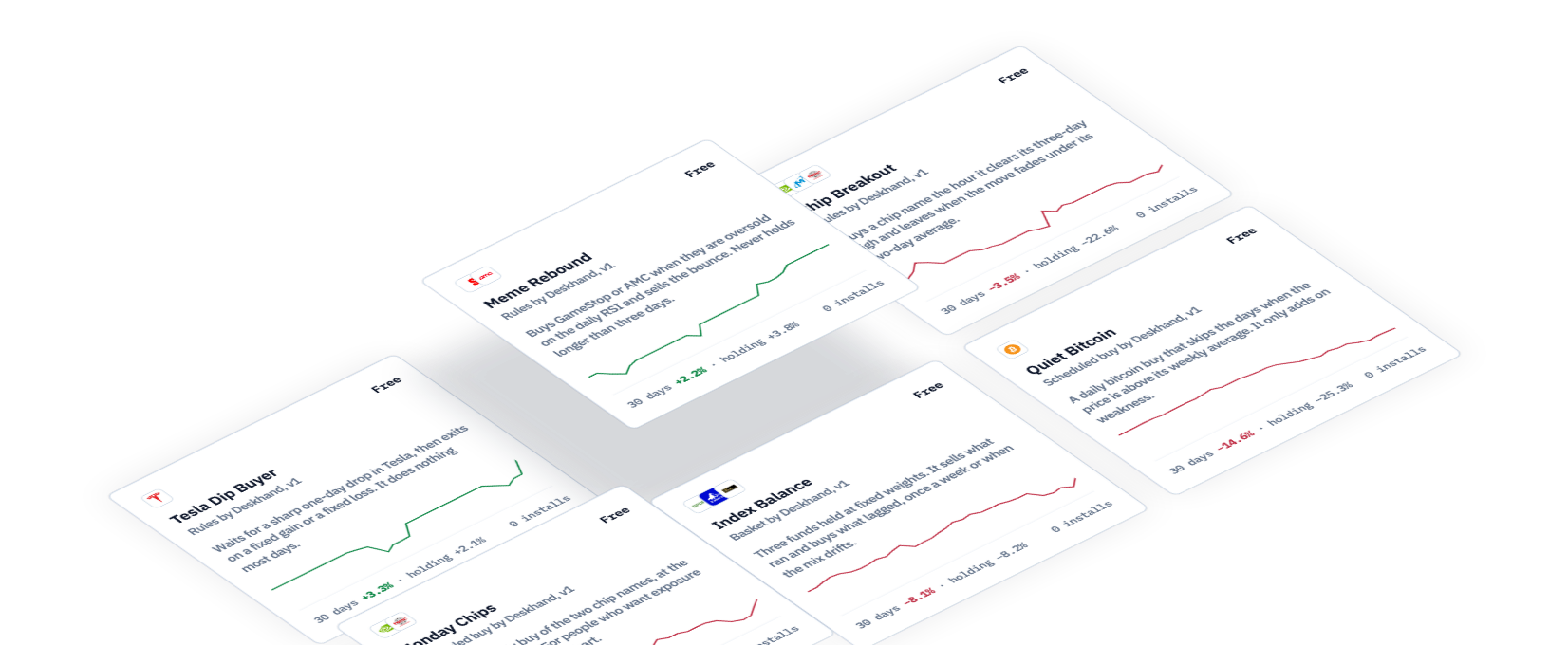
A plain weekly buy of the two chip names, at the US market open. For people who want exposure without watching a chart.

Three funds held at fixed weights. It sells what ran and buys what lagged, once a week or when the mix drifts.

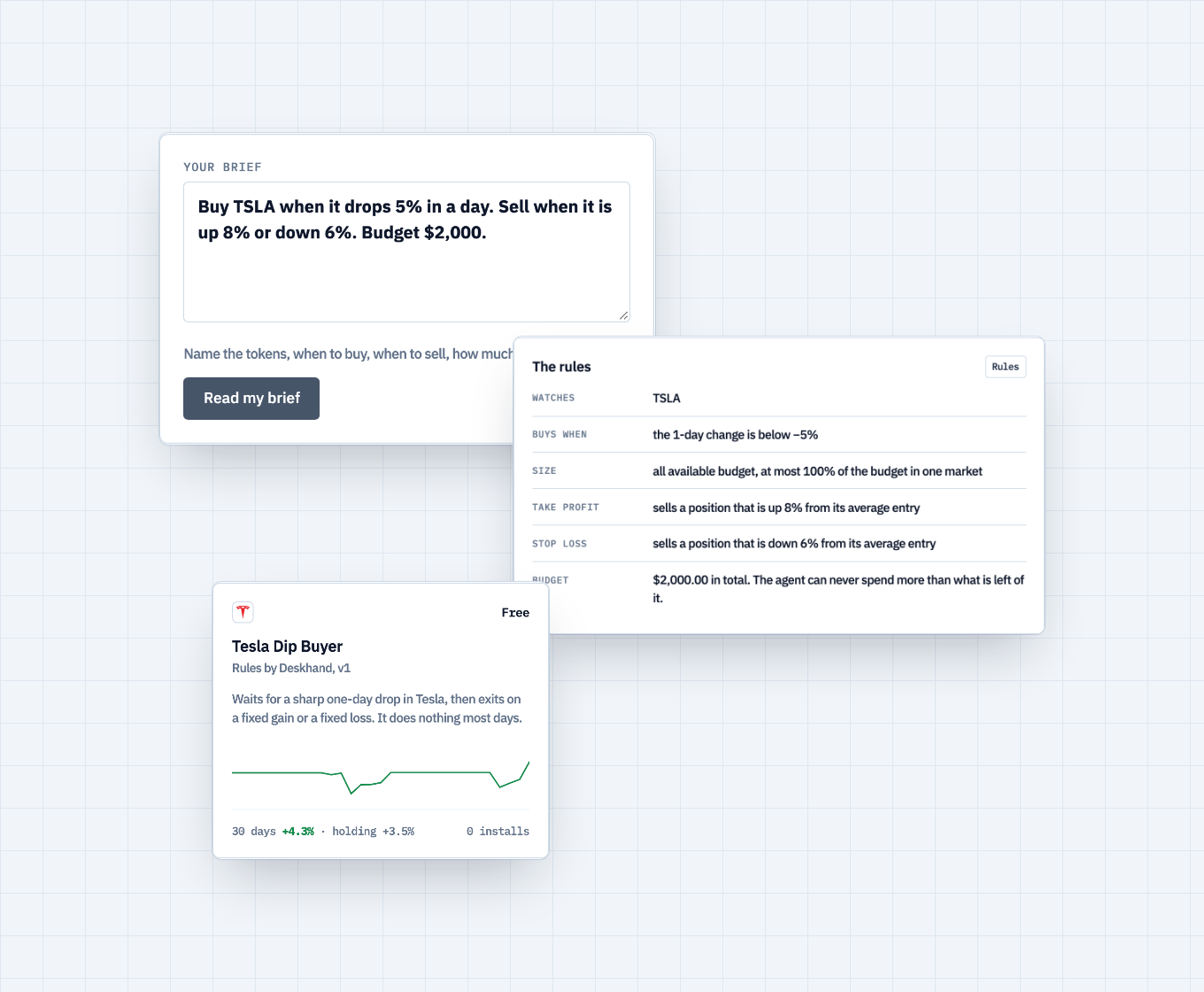
Waits for a sharp one-day drop in Tesla, then exits on a fixed gain or a fixed loss. It does nothing most days.
Buys a chip name the hour it clears its three-day high and leaves when the move fades under its two-day average.

A daily bitcoin buy that skips the days when the price is above its weekly average. It only adds on weakness.

Buys GameStop or AMC when they are oversold on the daily RSI and sells the bounce. Never holds longer than three days.



From a sentence to an agent on the job
Five steps on one screen. Nothing trades until you have read the rules and seen the simulation.


Say it the way you would say it to a person
Type which stock tokens, when to buy, when to sell and how much. Deskhand reads that into rules and hands back what it did not understand instead of guessing.
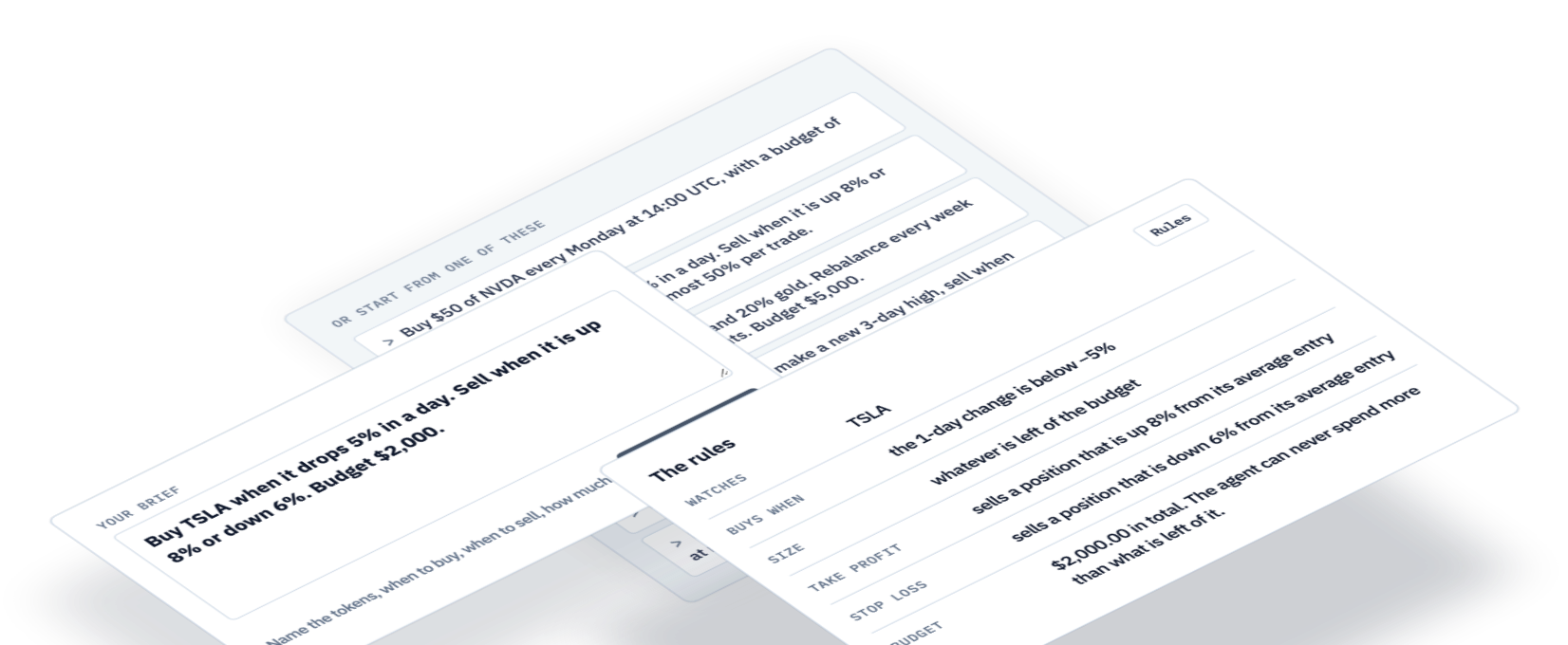
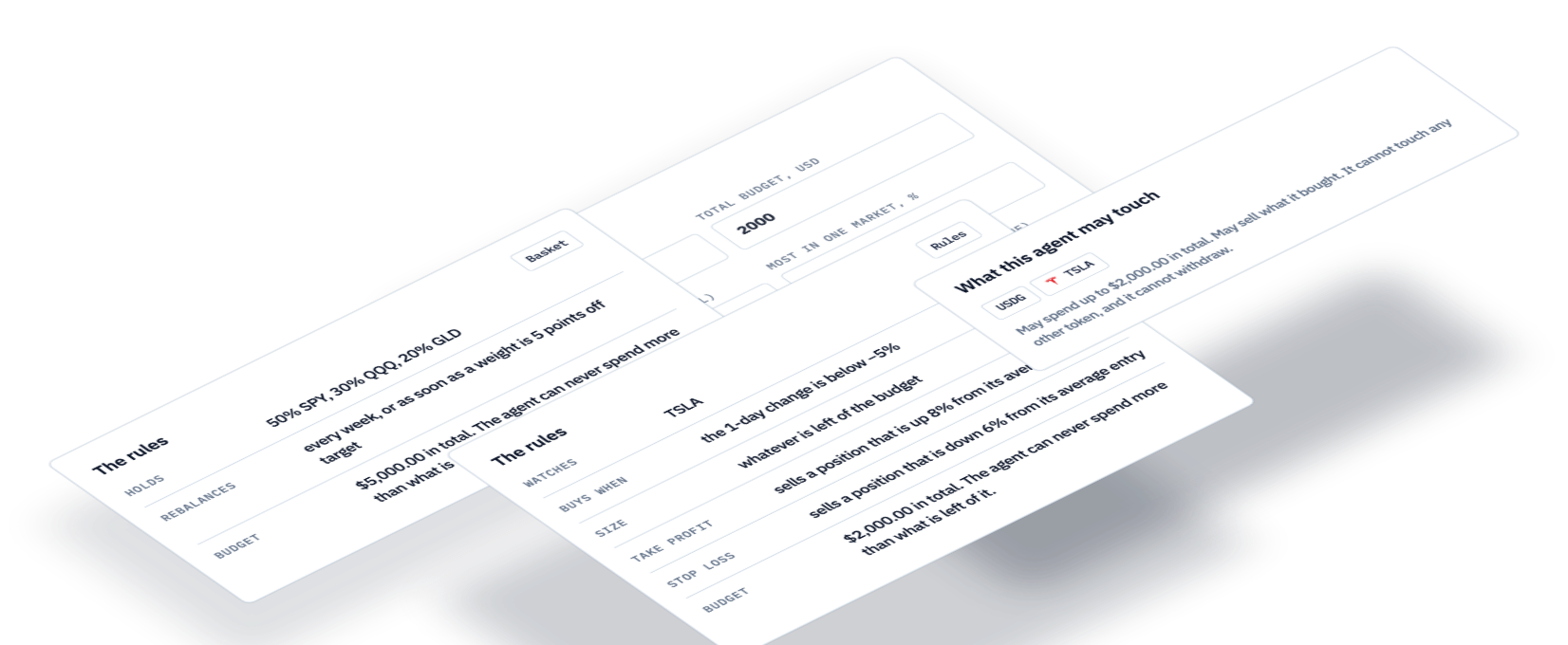
Every rule written out before the agent is switched on
The draft lists what the agent watches, when it buys, when it sells and how much it may spend. Change the budget and the limits, or rewrite the brief and read the new draft.
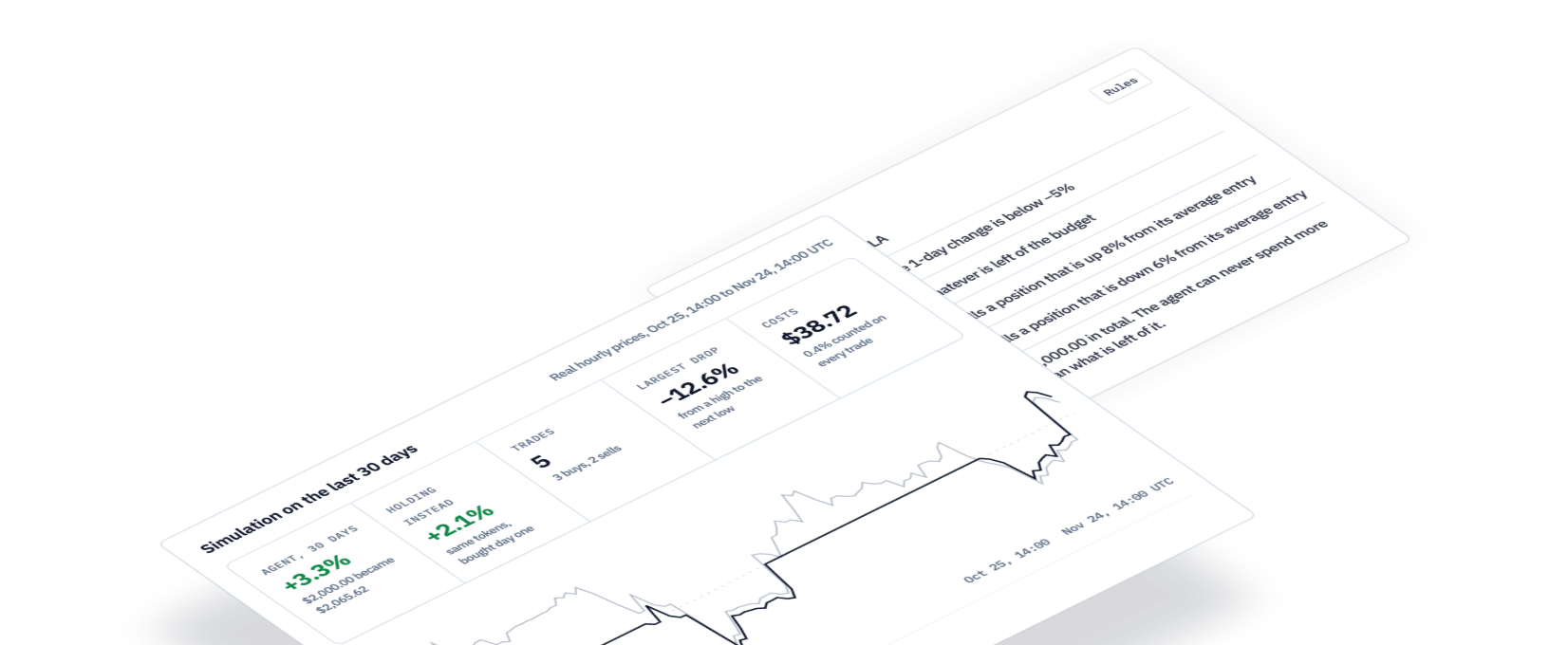
Replay the last 30 days, hour by hour
The engine that runs your agent also replays it on hourly prices read from the Robinhood Chain pools, with a cost on every trade, next to simply holding the same tokens.
Install an agent someone else wrote, or sell your own
Every listing shows its rules, the permissions it asks for and its 30-day simulation. You install your own copy with your own budget. Creators set a price in USDG and keep all of it.
Read why your agent acted, or why it waited
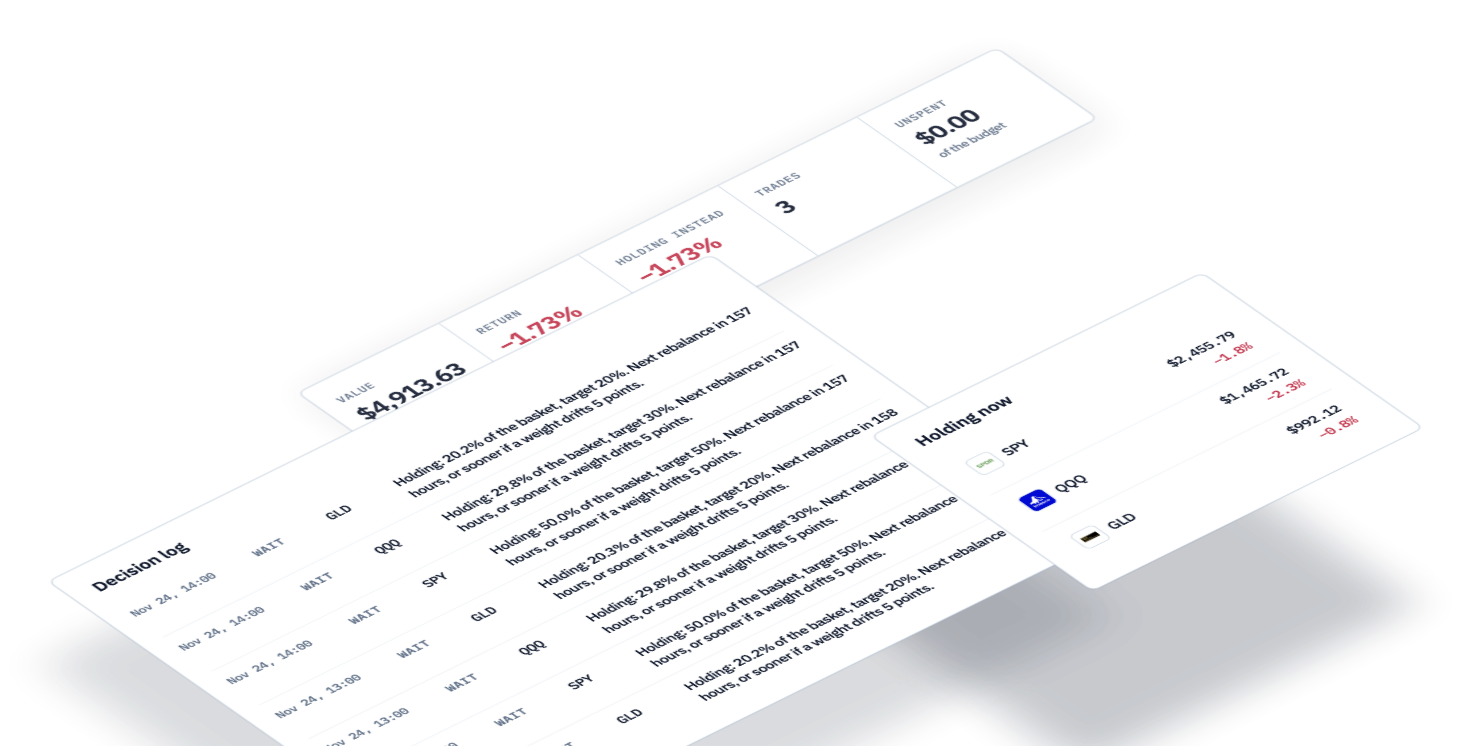
Every hour, every market gets a line: the rule it checked, the numbers it saw and what it did. A trade you signed carries its transaction hash.
You set the limits. The agent works inside them.
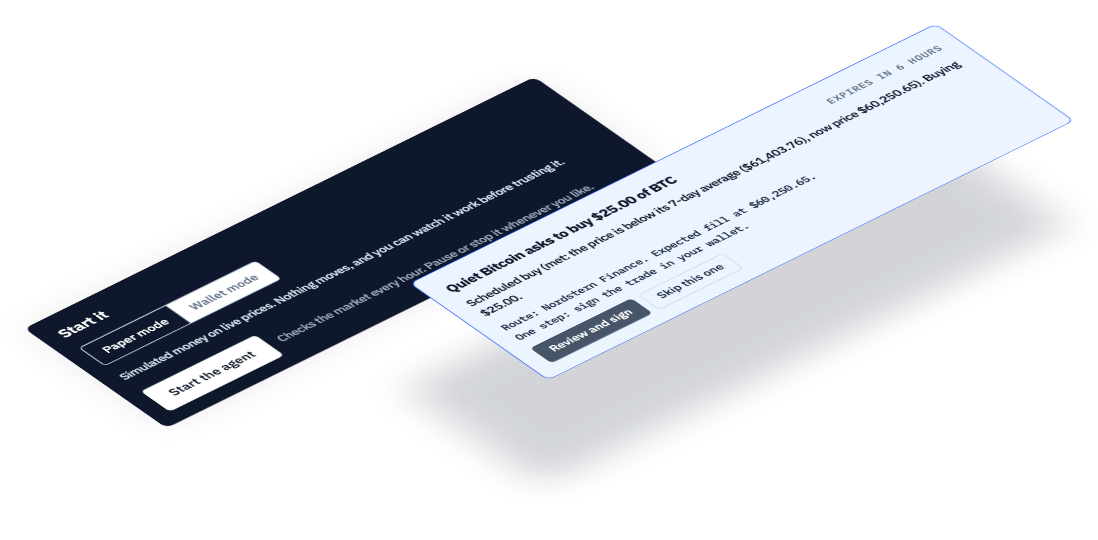
An agent can only touch the tokens you named and the budget you gave it. In wallet mode it cannot move anything by itself: it asks, and you sign.

Two ways to run an agent
Paper mode keeps score with simulated money on live prices, so you can watch an agent for a week before you trust it. Wallet mode sends you each trade as a request, with the route and the expected fill, and you sign it yourself.

Wallet permissions
Deskhand never holds your tokens or your keys.

Built to do nothing
Most hours the right move is to wait. The agent says so, and says why.

22 markets, priced on chain
Twenty stock tokens plus bitcoin and ether, each read every hour from its USDG pool on Robinhood Chain.


Plug in your own AI
Deskhand speaks MCP. Claude, Cursor or any agent can turn a strategy into rules, replay it on 30 days of real prices and read the marketplace and the live log, through one endpoint.

What the agents did this hour
Lines from the decision log of the agents running on Deskhand right now. Nothing here is written by hand.
Questions people ask first
Short answers. The longer ones are in How it works and in the risk page.
Do I need to know how to code?
No. You write what you want in a sentence, for example "buy $50 of NVDA every Monday" or "buy TSLA when it drops 5% in a day, sell when it is up 8%". Deskhand shows you the rules it read from it, and you change the numbers with ordinary form fields.
Does Deskhand hold my funds or my keys?
No. In paper mode nothing moves at all: the agent keeps score with simulated money on live prices. In wallet mode the agent sends you a request for each trade and you sign it from your own wallet. There is no deposit and no shared vault.
Where do the prices come from?
Every hour Deskhand reads each market’s USDG pool on Robinhood Chain. History comes from the same pools’ hourly candles. Bitcoin and ether are also checked against their Chainlink feed, and an hour with a bad or missing price is skipped instead of traded.
What does it cost?
Building, simulating and running agents is free during the beta, and so is publishing. A creator can put a price in USDG on a listing; the buyer pays the creator directly and Deskhand takes no cut. Trades you sign in wallet mode pay the usual network and swap fees.
Is a good simulation a promise?
No. A simulation replays 30 days that already happened, with an estimated cost on every trade. The next 30 days will be different. Use it to check that the agent does what you meant, and start small.