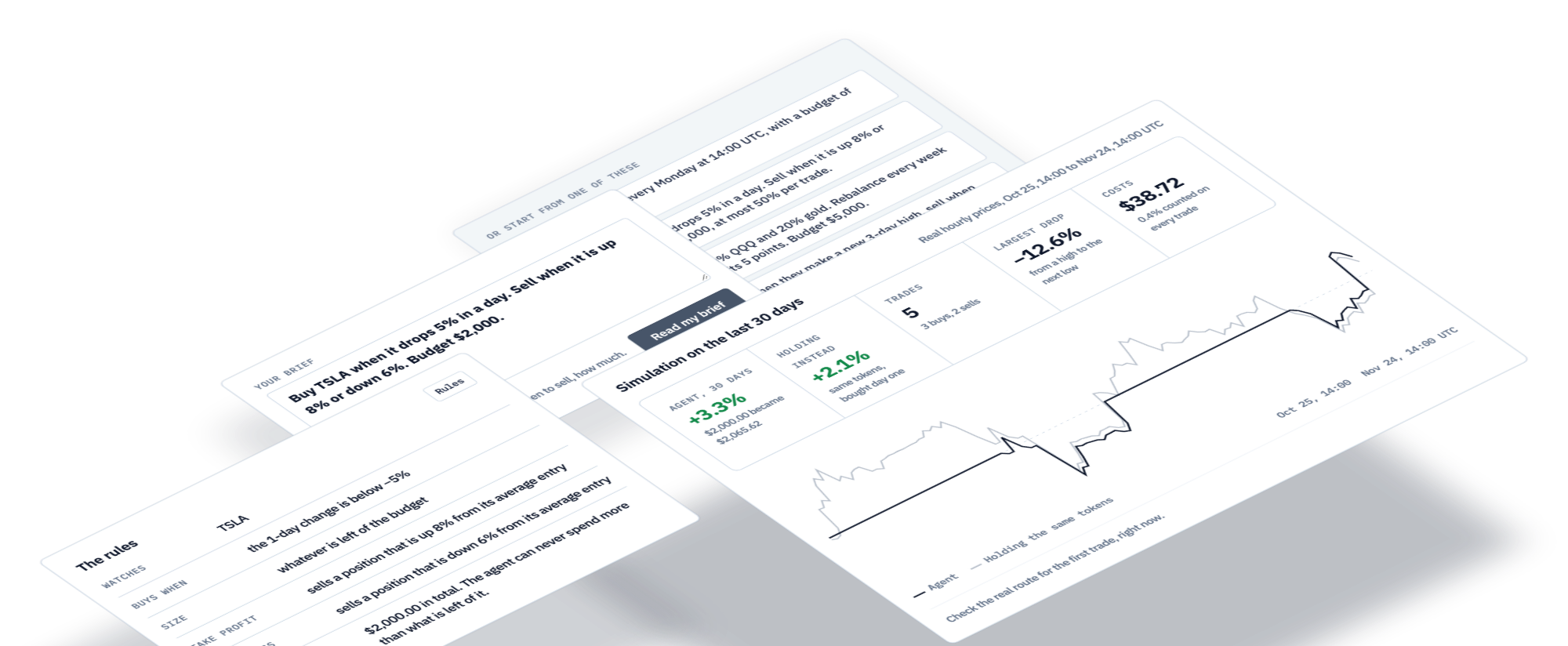
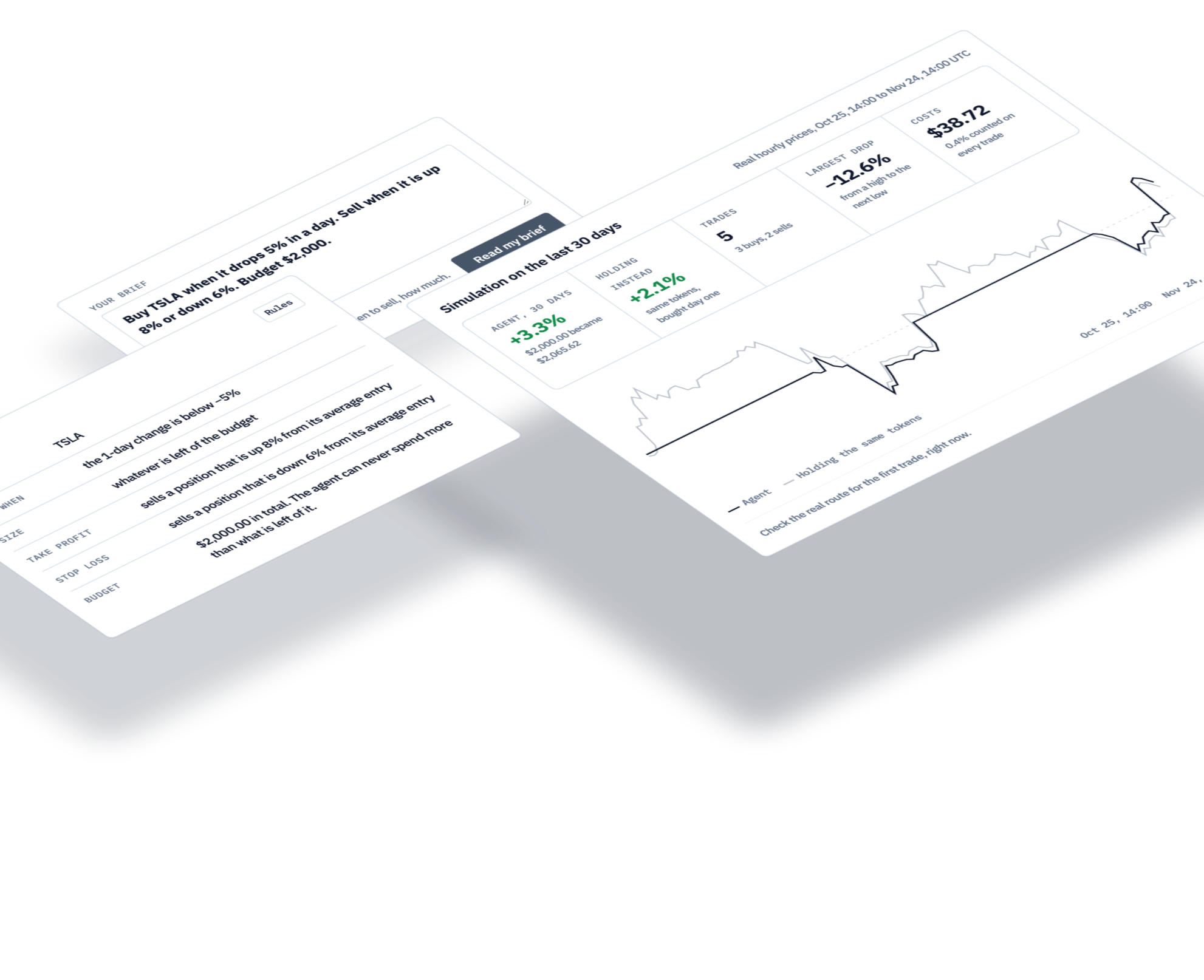
Reading a 30-day simulation without fooling yourself
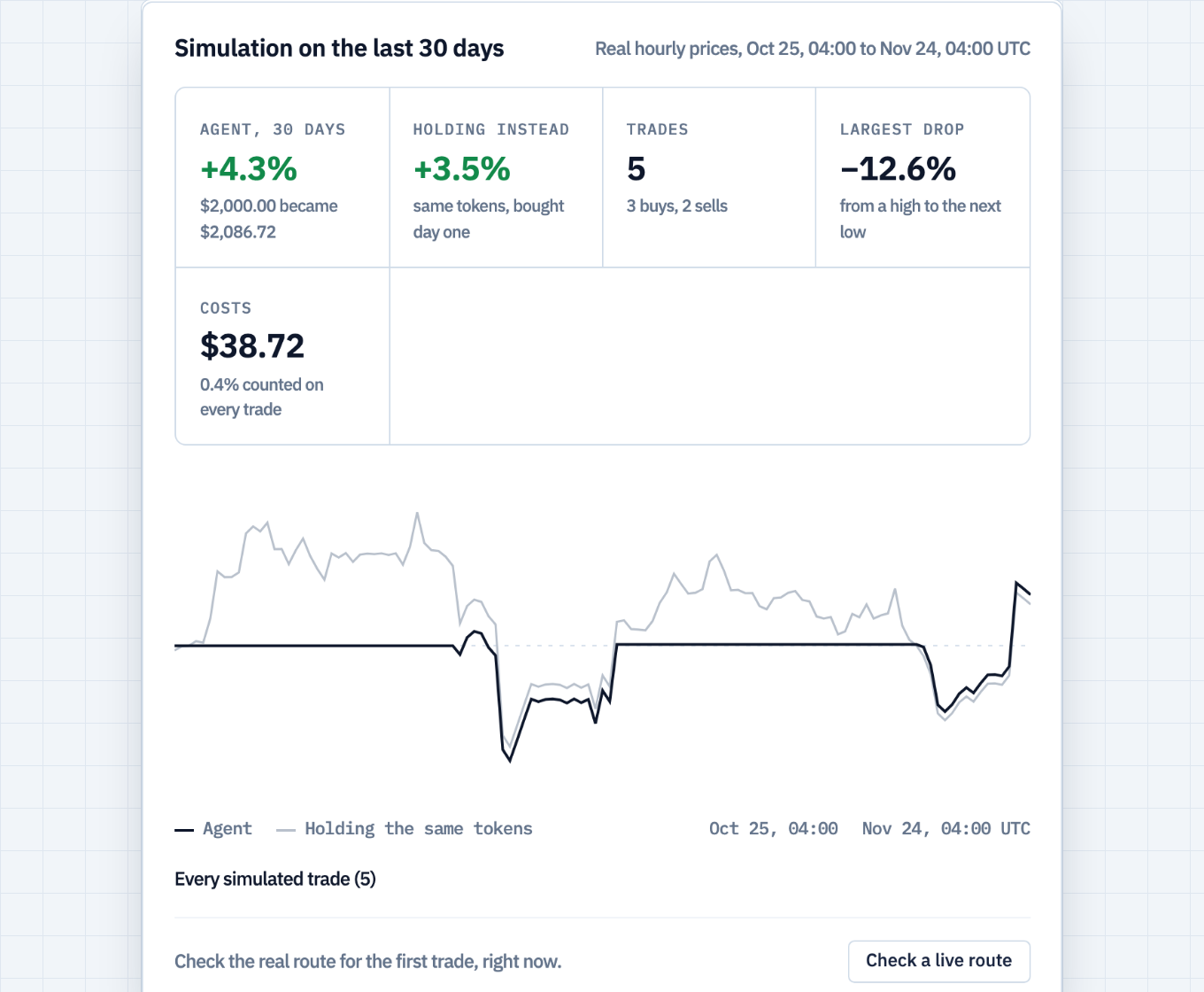
Five things to check before you believe a replay: the comparison, the fees, the drop, the number of trades and the month itself.
A 30-day replay is useful and easy to misread. Here are the five things we look at, in this order.
1. The comparison, not the return
An agent that made 4% in a month where its tokens rose 9% did not do well. An agent that lost 2% while its tokens fell 17% did its job. The “holding instead” figure is the same budget put in the same tokens on day one and never touched. Read the two numbers together.
2. The number of trades
Three trades in a month is an anecdote. The result of a dip buyer that triggered twice says almost nothing about the rule. Look at the list of simulated trades: if the whole return comes from one of them, treat the number as luck until proven otherwise.
3. The largest drop
This is the worst fall from a high to the next low during the month. Ask whether you would have left the agent alone through it. If the answer is no, lower the budget or tighten the stop loss, because the agent will only help if it is still running.
4. The costs
Every simulated buy and sell is charged 0.4% for fees and slippage. An agent that trades often pays this often. If the costs are a large share of the return, the rule is too busy for the size of the moves it catches.
5. The month itself
Thirty days is one kind of market. A trend rule looks brilliant in a rising month and bleeds in a flat one. Before trusting a result, ask what the month looked like for those tokens, and what the same rule would do in the opposite kind.
What to do next
Run the agent in paper mode. It costs nothing, it uses live prices, and after a week or two you have a second sample that was not known when you wrote the rule. Then start small.
The simulation answers one question well: does this agent do what I meant? Use it for that.
Write your first agent
One sentence is enough. You will see the rules and 30 days of simulation before anything runs.